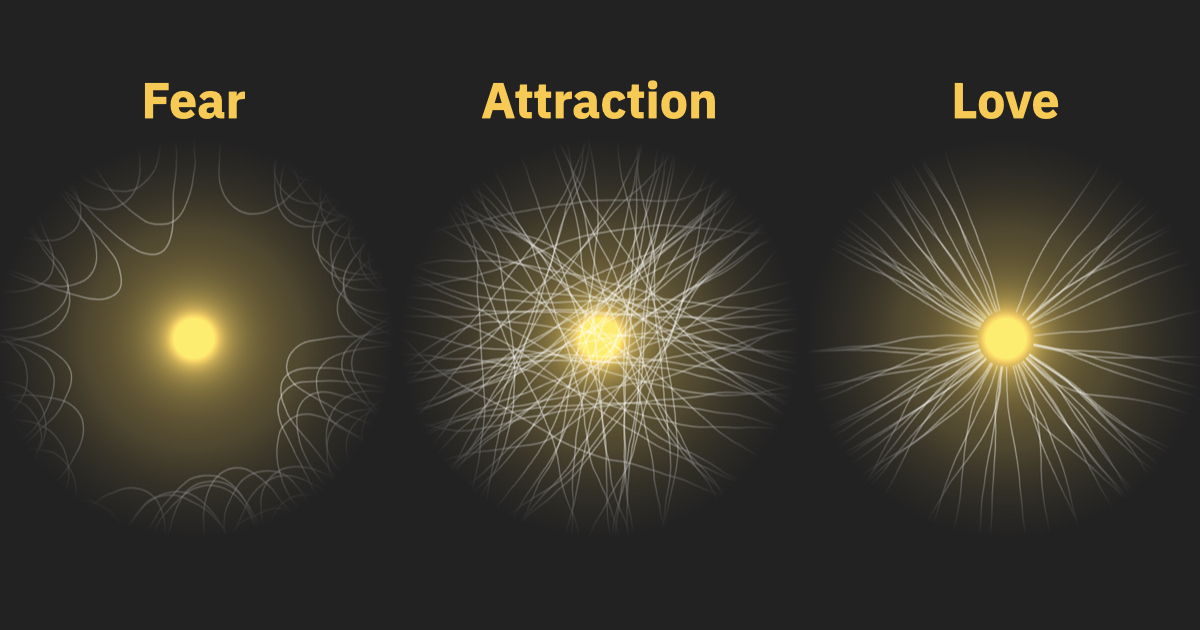
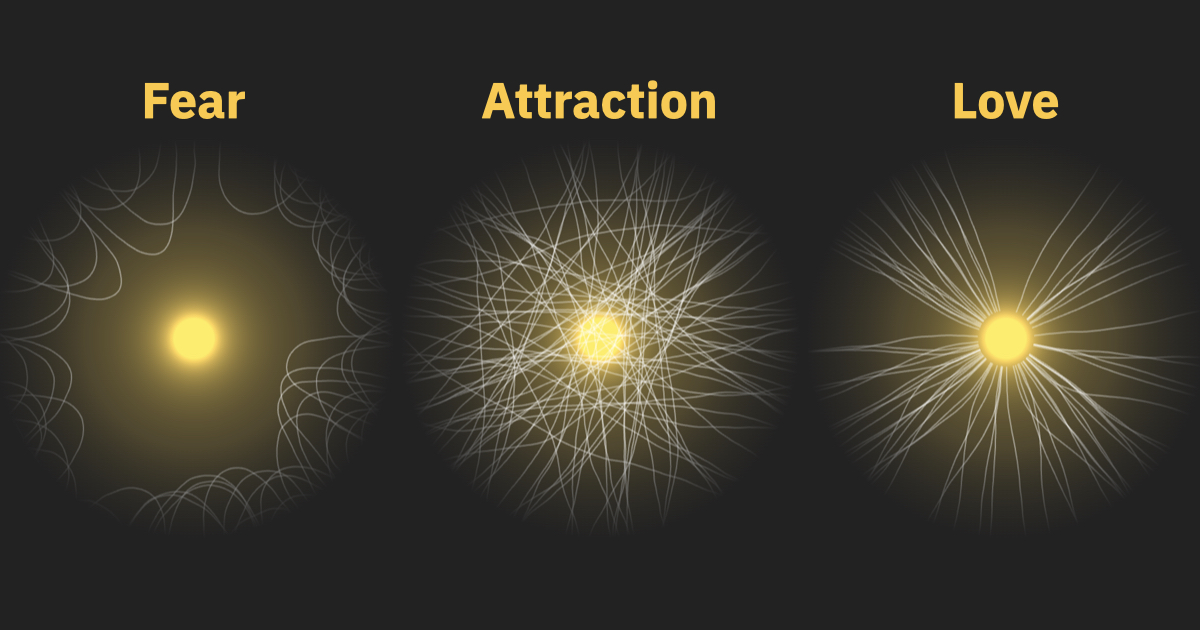
For years, we’ve been meeting weekly to chat about neuroscience. Our conversations circled around a big question: How does behavior emerge from brain wiring?
We turned these conversations into a series of interactive articles that visually explains how neurons in the brain wire together to create the beautiful and rich behaviors that surround us.
We strove to make these ideas playful, visual and interactive. The piece includes dozens of custom-built interactive graphics that let you experience the ideas for yourself.
Check it out, and drop us a line with your thoughts!
The awards, given by the National Academies of Sciences, Engineering, and Medicine in partnership with Schmidt Sciences, recognize science journalists, research scientists and science communicators who have developed creative, original work to communicate issues and advances in science, engineering, and medicine to the general public.
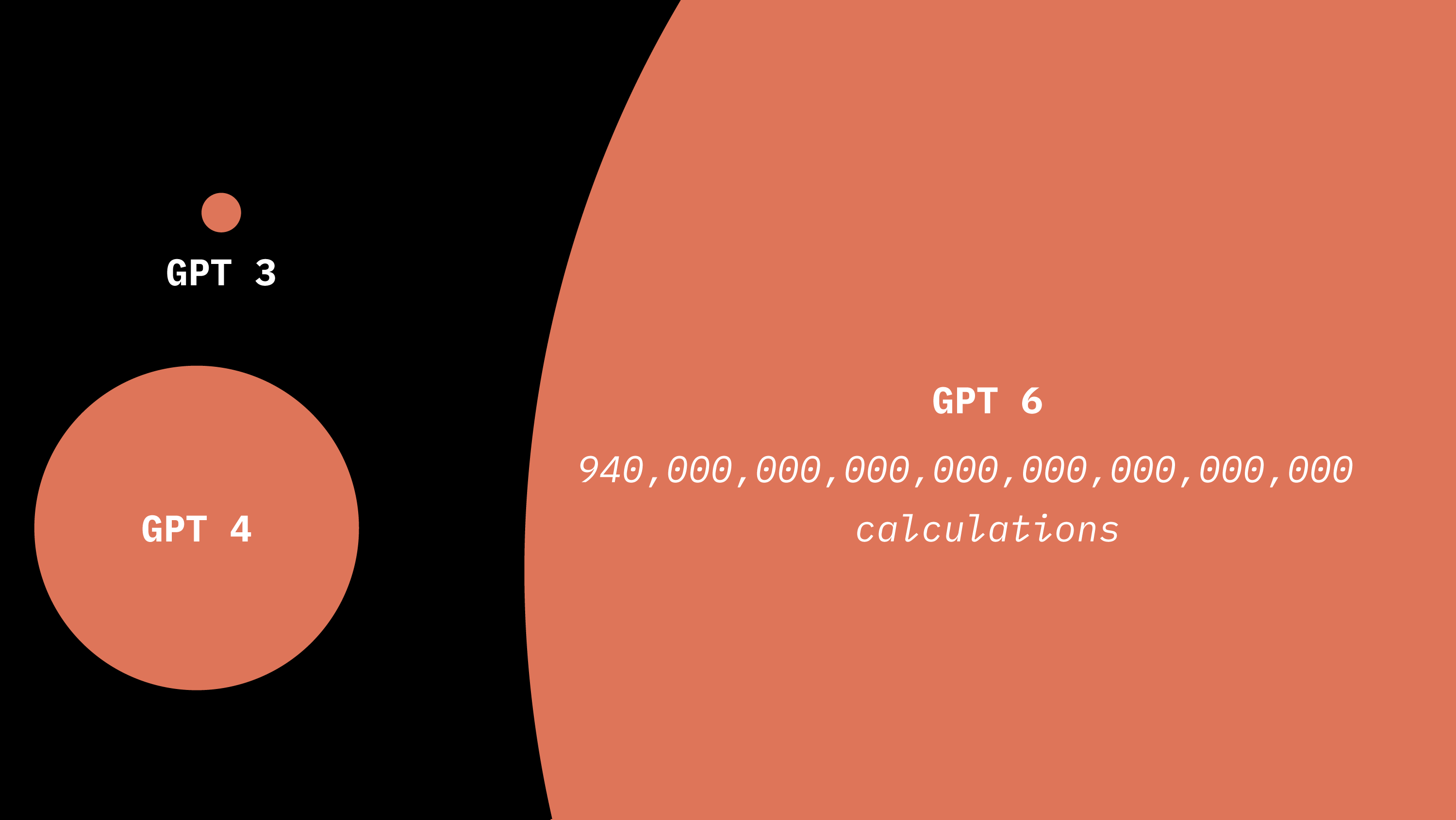
I wrote a piece last week in The New York Times visualizing the mind-boggling number of calculations needed to train the largest AI models.
“In 2026, GPT 6 Astra took nearly an octillion calculations to train — over 50 million times as many calculations as GPT 1 did. Even calling this figure astronomical understates its size: An octillion is a thousand times the number of stars in the known universe.”
An octillion is a thousand trillion trillion, or a number with 27 zeroes. As a comparison, I estimated that it would take an iPhone 17 Pro around 13 million years to do an octillion calculations.
We usually think of adding and multiplying numbers as abstract and immaterial operations. But it takes energy to do math. While working on this story, I started to see computation as a physical raw material that AI companies are consuming in order to obtain increasing amounts of intelligence, similar to how industries burn fossil fuels to obtain energy.
AI researchers have often referred to training AI in similar material terms: Ilya Sutskever, who co-founded OpenAI, has called data “the fossil fuel of AI” and Dario Amodei, the head of Anthropic, has written about how artificial intelligence emerges from a “big blob of compute”.
In other words, AI companies are using exponentially increasing amounts of “compute” to mine data for intelligence. And this ultimately boils down to using more and more energy, as I explain in the article.
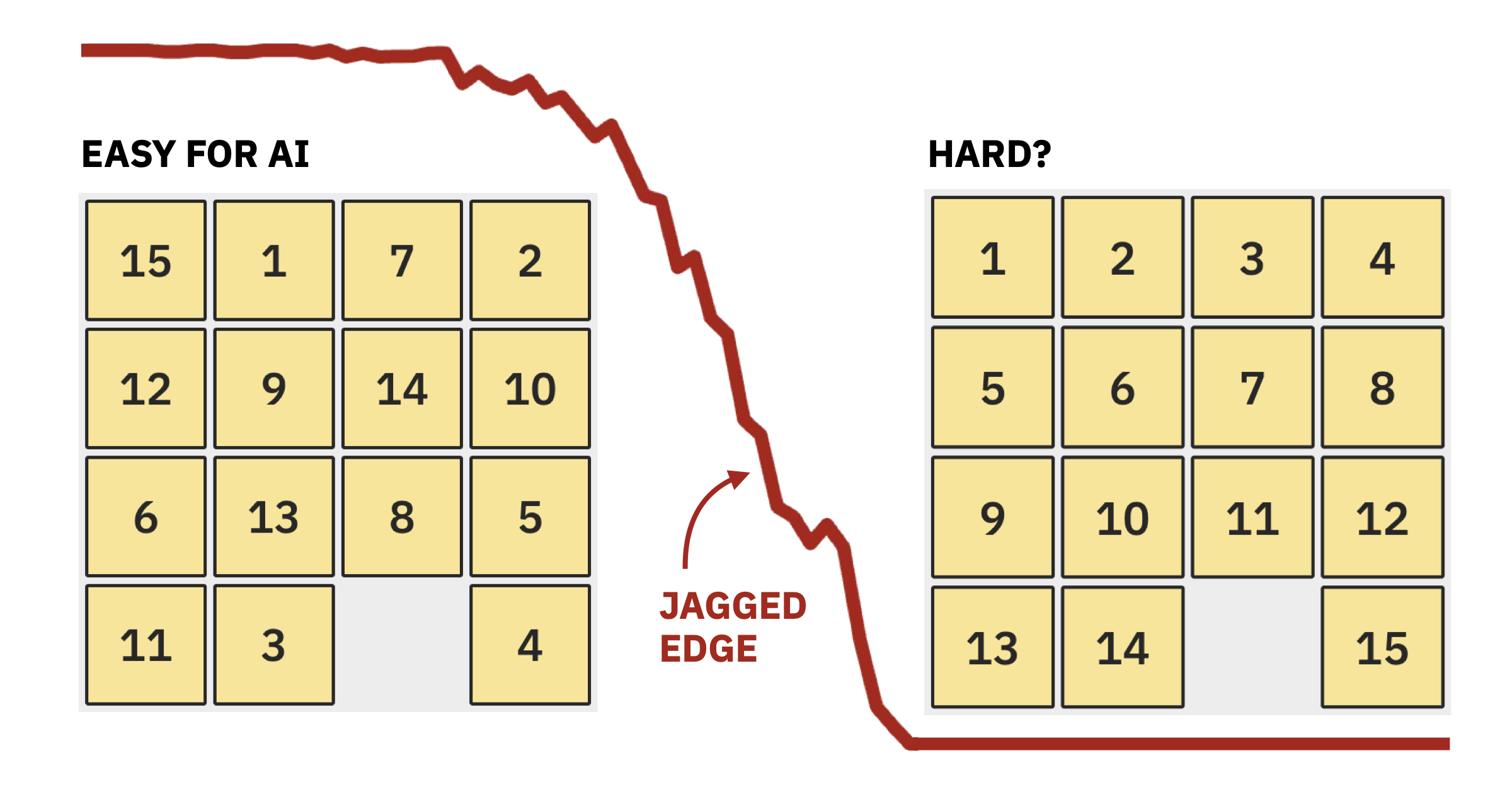
It’s undeniable that AI models have gained many powerful abilities. And yet, for all of their advances, they can still make basic blunders.
Researchers call this “jagged intelligence,” a term suggesting that there’s a jagged boundary separating what AI can and can’t do.
In this article, I’ll teach a large language model how to solve a simple puzzle, starting from scratch, and we’ll see exactly how this jagged intelligence emerges.
First, try the puzzle yourself:
Click on the tiles below to arrange them from 1 to 15